


The Importance of Mastering Materials Use and Manufacturing Processes
Our guest contributor py brings us this week a very informative article on how a designer can get better in the use of materials and their manufacturing processes. As usual it is very well researched, I hope you enjoy it as much as I did. Thanks py!

A strong understanding of material use and manufacturing processes is essential and needed in the Industrial Design industry today. Materials are an important consideration for any product design that needs to be realized. Therefore the right selection of materials and manufacturing processes is important in enabling a successful product launched to market.
Due to the advancements in modern technology, the range and variety of materials have increased way beyond basic materials such just wood, metal and plastic. So how then can we choose the right material for our products?


AUdall
September 21, 2007 at 3:55 pmExcellent post. Working in product development and sourcing, I routinely see firms come to us with products designed by ID teams that were not optimized for overseas, mass manufacturing.
Occasionally, expensive or exotic materials are called out that may not be available or is very expensive overseas, or the design is not tooling optimized and tooling is more expensive, etc.
I suppose it is understandable that 90% of IDs will probably never visit the actual production facility–because many would consider it unnecessary to do their job. But I agree wholeheartedly that becoming familiar with these things as well as wrapping one’s mind around the production process, will substantially help an ID design a great product that is feasible in the market.
Thanks for the insight…
py
September 9, 2007 at 4:13 pmHi Saikat,
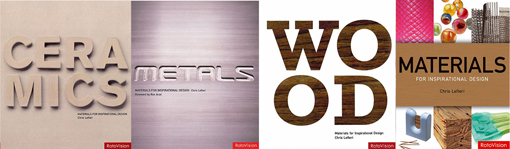
Thanks for the tip on Discovery Channel. I’m glad you liked this article. I understand what you mean about certain designers lacking the understanding of materials and manufacturing processes. Even I myself had this problem before, too, when I first started out. So these books really helped me through a lot to understand materials and maufacturing processes in greater light.
Another good tip other than reading is also to actually go see the actual manufacturing processes existent in your company or your vendor’s company, to see how things are actually made and done.
Saikat
September 9, 2007 at 12:32 pmone more thing!
Although it’s not directly related but Discovery Channel’s “How It’s Made” is a nice program about mass manufacturing and covers some aspects of material and process.
Saikat
September 9, 2007 at 12:21 pmthis is an amazing article !!
thorough understanding and interest about material and process is perhaps the most important attitude any industrial designer and as important as her/his passion for industrial design.
i have come across many people who are not bothered by material, process, fit and finish….
i think this is one of the fundamental and practical aspect of industrial design which makes it different form ‘art’ or ‘sculpture’.