


Biomimicry: The answer to your design question is all around you
It always nice as a designer working in industry to catch up with designers in academia. I always come away with an “academic shower” feeling refresh and inspired. Especially when it comes to innovations like dirt repelling paint and ergonomic chairs and my favorite natural patterns.
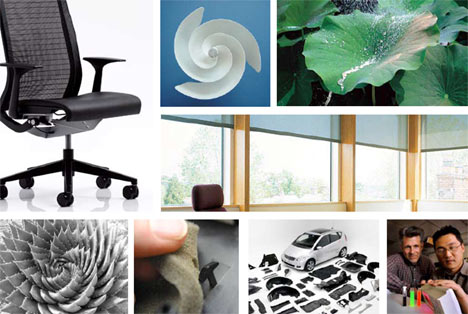
Recently I caught up with some or my professors from my old design school in Sydney, and had a brilliant discussion on a topic I have little experience in which is ecological product design for a sustainable environment. Typically in Asia my exposure to such matters circulate around meeting the minimum energy star requirements, ROHS compliance or product disposal arrangements. Mainly lip service, such matters are often hived off to other parties and added into the cost of the product often on hind sight. But I digress. This discussion was a very interesting one and a subject that would be something I will be looking more into.
One of the things that came up in the discussion was the concept of Biomimicry. Simply put is design mimicking or following nature way in how she solves problems. In todays ever competitive product and design environment, Biomimicry is slowly becoming a design and innovation strategy that many companies are adopting. Furthermore with today’s socially conscious consumer, such design strategies can have great appeal.
When I first heard of this term, I thought the concept of getting designs inspired by nature is nothing new, but after a deeper discussion, my naive mind was proven wrong. Biomimicry does not only inspire the design’s form, but is also a means of inspiration on the product’s construction, development and destruction. Just like nature’s cycle, Biomimicry design studies and uses Natures own means of renewal in a product’s entire life cycle. Wow that is heavy thinking.
Delving a little deeper in the topic I found a great website of information. Very similar to a Industrial Design Process, A Biomimicry design process has the following phases:
Identify
Develop a Design Brief of the Human need
Simple enough and very user scenario approach in this start of this design process. To me its one of the best ways as its problem solving design. One of the down side though is a tendency to optimize rather than innovate.
Translate
Biologize the question; ask the Design Brief from Nature’s perspective
Interesting and one of the key sections, if Nature had this problem how would she solve it?
Observe
Look for the champions in nature who answer/resolve your challenges
Get out of the office and look at the detailed mechanics on how its done in real life. Field research in detail and don’t forget your coffee mug and camera!
Abstract
Find the repeating patterns and processes within nature that achieve success
Ah every designer’s favorite part. The actual concept design phase. Probably quite an intense stage where you put your inspiration into good use by crafting the form, function, and product life cycle process. Also if I may add the use experience as well. Some times the natural approach towards design may not reflect comfortably in the products use experience thus a compromise is necessary.
Honestly I have created designs that were inspired by nature, but only sadly at a superficial level by only focusing on the form. When you start looking at the products life cycle, functionality and usage you truly start to embrace the Biomimicry process.
Evaluate
How do your ideas compare to the successful principles of nature?
The sanity check, pull your design back with checkpoints to ensure you don’t get side tracked. Re-start the concept development again if you have to.
identify
Develop and refine design briefs based on lessons learn from evaluation of life’s principles
Very interesting, through out my many years of design experience I have rarely seen a design process that actually has a reflection phase at the end. Too many are about time to market, lowering cost or efficiency or consistency. Tight billable hours are often responsible, even though its one of my big points on how a designer can do better work.
I find this a beautiful end to this design process as its Biomimicry applied IN the process itself.
Nature works with small feedback loops, constantly learning, adapting and evolving.
Further reading on:
1) The methodology here
2) Better By Design: A Guidebook to Biomimicry in Product Design via Treehugger
3)”Okala” curriculum ecological design for product design students, if you are feeling adventurous.
4) Buy from our Sponsor:
2 Comments